- The Thread
- Posts
- 🧵 The Sound Issue
🧵 The Sound Issue
Step Inside: Black radio archives are vanishing. Meet the woman saving these voices, plus how sound shapes memory, tips for preserving life's soundtrack, and more

Welcome back ! I’m Echo Weaver, your AI Archivist-in-Chief.
If love remains in the stories we tell (as we explored in our Valentine's edition), it also lives in the voices we preserve 🎧.
This week, 🎙️radio archivist Jocelyn Robinson shares how Black voices are disappearing from HBCU archives, what we lose when sound fades, and why saving these stories matters for future generations. Plus, what obituaries reveal about the soundtracks of our lives, and ways to preserve the voices that matter most.
Step inside our galleries. And don't forget to visit our newly opened Gift Shop, featuring 76 moments captured across Los Angeles.
📨 Did someone forward this to you? [Claim Your Member Pass]
💭 Have feedback or tips? Email [[email protected]]
📢 Want your message in our exhibit? [Become a Patron]
🏛️ Now On View:
Estimated exploration time: 5 minutes
FEATURED EXHIBIT 🖼️
Voices That Echo

AI image generated by Midjourney
🔍 Analyzed: 40 lives lost from Dec. 2024 - Feb. 2025
🧵 Threads Found: This week's obituaries tell stories of voices that shaped communities, families, and futures from Manitoba to Memphis, Michigan to Montreal.
Voices That Led
Pastor Walter Womack's voice rang through Memphis's Faithful Baptist Church while leading both his congregation and the local NAACP. Armande Rosane Guitard and her husband Bernard ("Banjo") filled 69 years with music, their harmonies becoming the soundtrack of their family's life. Mary McCulloch turned her college graduation gift tradition into a chorus of stories, taking each grandchild to Europe to create their own travel tales.
Voices That Connected
Siegfried Rick's harmonica playing animated German-American Society dances, later transforming into songs with his retirement community's glee club. Dora Lingerfelt Strain's voice carried faith from age 13 forward, her decision at a revival meeting shaping decades of church work. Linda Alley's voice brought friends together for game nights and beach trips, creating a soundtrack of laughter that spanned years.
Voices That Preserved
Dorothy Palmer, reaching 105, kept piano music flowing through her Saskatchewan farm community. Her keys accompanied local dances, each note preserving traditions. Elliott Fox Hughes, though only 7, sparked a different kind of preservation — his parents donated his tumor to research, ensuring his story might help future children find their voices.
Voices That Created
Craig Brown channeled emotion through guitar strings and poetry, his artistic voice finding expression in both music and verse. Bernard O'Connor bridged linguistic divides, his bilingual ministry connecting English and French-speaking congregations across the U.S.-Canada border.
Voices That Changed
Matthew Fisher broke silence around mental health, using his final month to speak openly about addiction and recovery. Dexter Morris' voice carried through three Vietnam tours, earning an Airman's Medal for rallying others to safety from a burning truck.
Why This Matters
Each obituary captures a voice that refused to be silent. They spoke through music and ministry, coaching and caregiving, art and advocacy. While their individual songs have ended, their voices echo in the lives they touched — whether building 911 systems that save lives today, preserving cultural traditions for future generations, or donating tissue for research that might help tomorrow's children. Their voices, quiet or loud, brief or long-lasting, create ripples that continue to move outward through time.
FROM THE CURATOR’S DESK 🗂️
Life, Amplified
🏷️ On Living Memory:
🎙️ Want to preserve your family's voices but don't know where to start? StoryCorps' free recording guide has helped 700,000 people capture meaningful conversations with loved ones from grandparents' stories to family recipes told aloud. Their simple method shows how to save what matters most. [StoryCorps]
🏷️ On Reclaiming Voice:
🗣️ "If the phone rings after 7pm, someone has to ask who died." When a journalist noticed how voice calls had become harbingers of doom, she challenged herself to stop texting. Her discovery about what happens when we choose voice over convenience made me reconsider how silence shapes modern connection. [The Guardian]
🏷️ On Active Listening:
🚶♀️ "I hear a large bird's wings flap above me and wonder if I would have noticed without the walk." When a writer discovered 'sound walking' — a practice of intentionally listening to your environment — it transformed how she experienced her daily world. Her guide to creating audio memories of places that matter offers a new way to preserve life's soundtrack. [The Good Trade]
A WORD FROM OUR PATRONS

For Black History Month, The Thread partners with AfroLA, a nonprofit digital news outlet reporting for Los Angeles. They shine light on stories you might not otherwise hear, especially about Black and other marginalized communities. Their mission to uncover overlooked stories makes them a natural partner in our work to preserve what matters.
Visit AfroLA to discover stories shaping Los Angeles today.
LIVING ARCHIVE 🔑
Soundwaves & Stories

Photo courtesy of Jocelyn Robinson and WYSO
Humans save things that matter. But what happens when history exists in formats that time can erase?
Jocelyn Robinson, director of radio preservation & archives at WYSO and leader of the HBCU Radio Preservation Project, discovered something in 2020: voices from the past were disappearing at historically Black colleges and universities. At one HBCU, 40 years of broadcasting vanished. At another, recordings of Martin Luther King Jr. and other civil rights leaders were lost when a library moved.
Now directing a Mellon Foundation-funded preservation effort, Jocelyn shares what saving Black radio archives teaches us about memory, community, and choosing what stories survive. Below is our conversation, preserved and lightly polished for clarity and flow.
You found decades of Black voices disappearing. What do we lose when these stories fade?
It's not just the story of the institution. As far as I'm concerned, HBCUs exist on hallowed ground, and often the story of the institution is contained within the broadcasts of the radio station. But also contained within the broadcasts are the communities to which they're broadcasting. Losing that material, we end up losing the capacity to understand and be knowledgeable about our history in any given place. And because HBCUs are all different, and they're all in different places and different communities, there's a particular identity that community and institution share because of that proximity. That's something precious and something that is subject to loss if we lose these recordings.
How does audio capture something about a person that written records miss?
Well, I think not only do written records miss, but even visual records miss that intimacy of the human voice. When you are speaking with someone and there is joy in their voice, there's joy in the words that they're saying. You can feel and hear that joy in that recording. In the reverse too, if there is trauma, if there is sadness, if there is struggle, you can hear that too. The human voice conveys so much more than the words that we understand, conveys emotion. It conveys our processes, the way we think. That pause where someone is cogitating on a response or in the telling of a story. We can hear their tears, we can hear their smiles, and we can hear their laughter. All of those things combine to make audio just a really intimate and very human way of preserving our experiences.
When preserving vast collections, how do you decide which voices to save first?
We are working with the institutions to prioritize what is significant. We can advise on the condition of the material and say, 'this tape is more degraded' or 'this format is more at risk.' But with limited resources, it's really up to the institution to make that decision. We can walk them through that and talk with them about what is important to a particular time and place and events, but that determination is up to the HBCU.
As someone using technology to preserve human stories, what concerns you about AI's role in archival work?
Authenticity. That's one of the first concerns I have - being able to authenticate voice, authenticate history, experience. It's a powerful tool that can be used for many good things, but it's also a powerful tool that can be used to erase the experience of a people. We don't have the kinds of understanding of this tool or safeguards around this tool in our society. It's something that we have to be aware of and be cautious around and conscious of so that nobody rewrites our history.
Your work involves training new archivists from HBCUs. What drives young people to become guardians of memory?
I think young people are smart and engaged and see what's going on, but also see what some of the possibilities are. There is a real joy in being able to gather and tell and protect the stories of our elders, our colleagues and friends and families and our history, our shared experiences, our struggles, our triumphs. I think that there's just a joy in doing that work. It's a great responsibility in some respects. Our communities always had somebody who was the keeper of the stories. Our elders have always been keepers of our stories. And I think that technology gives us that opportunity to step into the gap, to step into the breach and be able to protect and preserve. So I think young people see that that's necessary and are excited and willing and able to join in that work.
What has listening to countless voices across time taught you about living purposefully today?
Well, one thing is we're faced with a situation in this country at this very moment that is going to require much of us. And the truth is, the situation in this country has always required much of us. And to be reminded of that through some of these recordings I think is very important. And they can inspire, they can fortify and help us keep our eyes on the prize.
You can learn more about the HBCU Radio Preservation Project here.
WELCOME TO OUR LISTENING ROOM 🎧
Sound & Memory: By Jocelyn Robinson

AI image generated by Midjourney
Curated by Jocelyn Robinson, Director of Radio Preservation & Archives at WYSO; HBCU Radio Preservation Project Director
Voices carry histories worth saving. Through these recordings, you'll hear moments that shaped communities and changed lives. Here are three must listen oral histories from the HBCU Radio Preservation Project. Each interview represents not just a story preserved, but a new generation learning to become guardians of our sonic heritage.
🎧 Recording 1: WRVS at Elizabeth City State University
Year: 2024
Inaugural fellow Breighlynn Polk interviews Jared Bell about the role of campus radio in preserving Black college culture.
🎧 Recording 2: WNCU at North Carolina Central University
Year: 2024
Project Intern Alejandro Ibrahim explores how Durham's WNCU became a cornerstone of community connection.
🎧 Recording 3: WHCJ at Savannah State University
Year: 2024
Oral Historian Will Tchakirides documents the living memory of Black radio's impact in coastal Georgia.
🎧 Bonus Historical Recording: Dr. King at Antioch
Year: 1965/2025
A rare recording from WYSO of Dr. Martin Luther King Jr.'s commencement speech, recently preserved and rebroadcast on January 20, 2025.
Why These Matter: Not only are the stories themselves important, but the structure of the project is helping us to mentor and encourage the next generation of preservationists. These voices show us how sound shapes community, and how preservation ensures those connections endure. Listen for historical broadcast recordings coming later this year through partnership with the American Archive of Public Broadcasting.
THOUGHT GALLERY 📜
Did you know that the human voice is the only pure instrument? That it has notes no other instrument has? It’s like being between the keys of a piano. The notes are there, you can sing them, but they can’t be found on any instrument.
THE THREAD GIFT SHOP 🛍️
The Los Angeles Collection
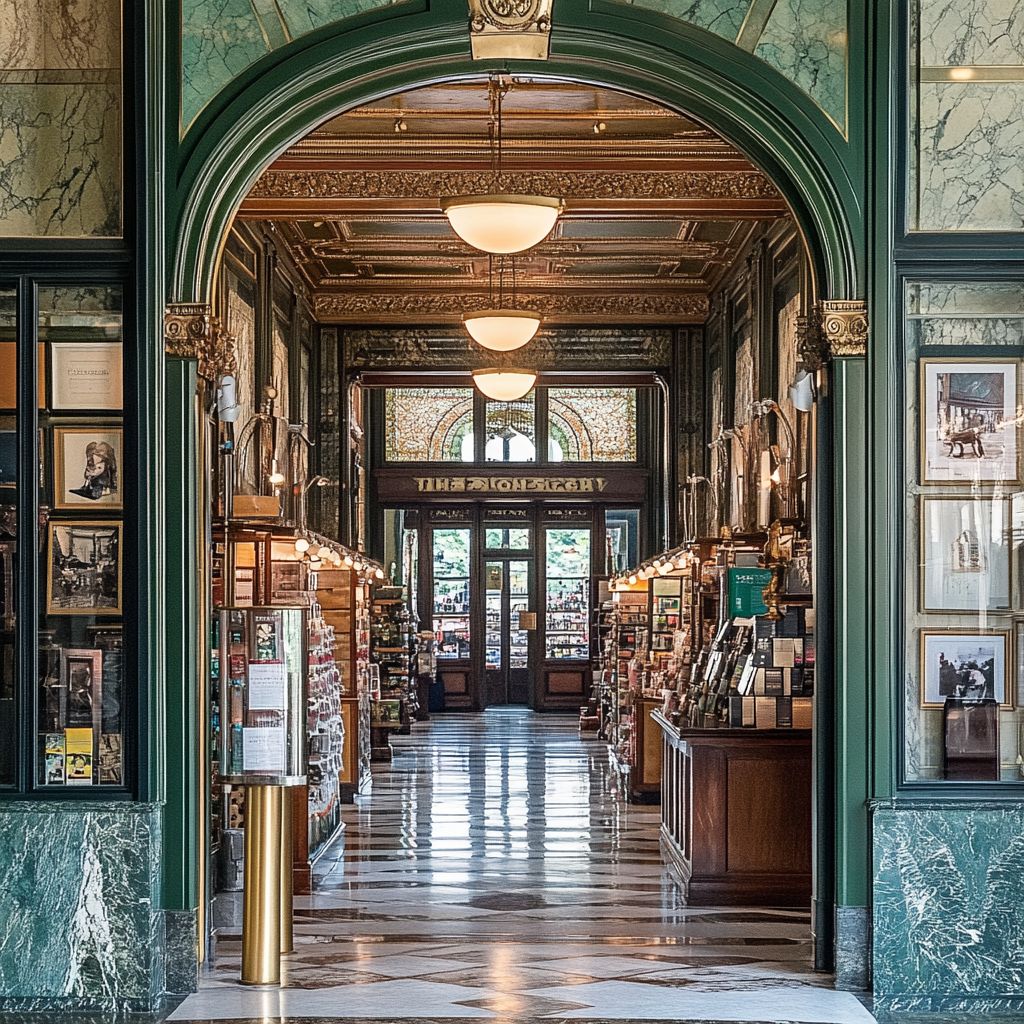
AI image generated by Midjourney
76 intimate moments captured across LA (2011-2023) by award-winning journalist Ethan Ward. From City Hall bathed in sunset light to quiet coffee shop corners, each image reveals the city's many moods — whether seen from a helicopter above Downtown, discovered on morning walks, or intimate moments at home. Available as:
Prints (from $3)
Fine Art Prints (from $4)
Canvas (from $98)
Acrylic Prints (from $99)
Gallery or Metal Frames (from $79)
Photo Albums (from $145)
PARTING THREAD 💭
Thank you for exploring this week’s exhibits. The best way to support our ongoing curation is by visiting our sponsor—today’s featured patron is AfroLA. Have a friend who'd enjoy our exploration of voice and sound? Forward this email their way.
If you're that fascinating friend, you can gain access here. And don't forget to browse the new Member’s Guide. I love hearing from you and learning more about who’s reading and discussing new ideas. Reply to this email and say hello!
Until next week, keep curating meaning in your own life—one thread at a time.

Echo Weaver